|
|

| Overview | Learning Outcomes | Key Concepts | Readings | Study Process | Discussion Forums | References | Supplementary |
|
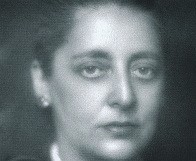
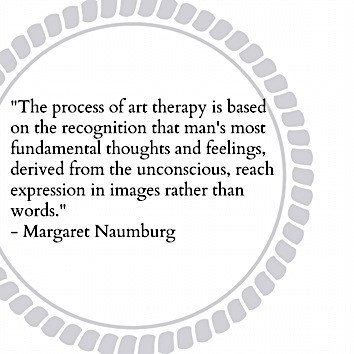
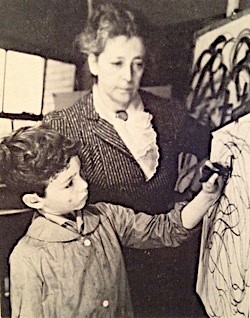
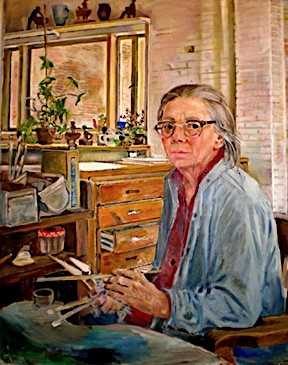
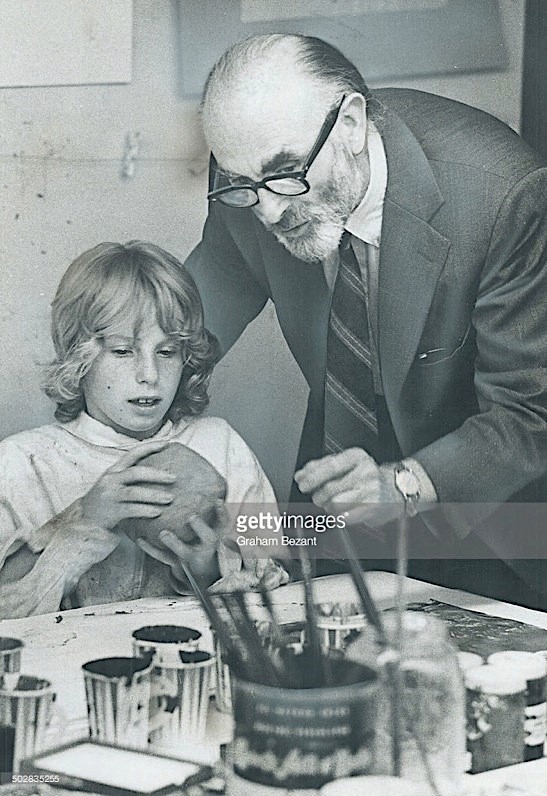
Many practitioners today incorporate art into the practice of psychotherapy. Art therapy seems to have developed simultaneously in the 1930s and 1940s in both Great Britain and the United States, and in Canada during the 1950s. The purpose of this lesson is to introduce you to some of the founders and pioneers of art therapy, most of whom espoused psychodynamic approaches. However, the ideas of these early pioneers varied with their primary identities as artists or therapists, as the nature of art therapy often depended on the place held by art in the life of each practitioner. As well, their earlier training as artists, educators, psychologists, or psychiatrists influenced their beliefs about how art therapy worked. This lesson first considers how art therapy as a distinct profession was developed by Margaret Naumburg, her sister Florence Cane, and Edith Kramer. Both Naumburg's and Kramer's works are firmly rooted in psychoanalytic theory. Naumburg placed emphasis on the free associative process, but she was also drawn to Jung's notions of universal symbolism. Kramer focused on another psychoanalytic constituent, sublimation, as it may be achieved through art-making. During the 1950s, Naumburg and Kramer published many writings about art therapy, attracting others to its ranks over the next several decades. At the same time, art therapy was developing as a studio-based, art-centred phenomenon, but this aspect of art therapy history is one that has been largely overlooked (Wix, 2010). In Canada, pioneers such as Martin Fischer, Marie Revai, Selwyn Dewdney, and Irene Dewdney distinguished clearly between art in therapy and art activities that happen to have some therapeutic components. The essence of art therapy for them was that it needed to partake of both parts of its name, clearly involving art and therapy. The art therapists presented here and in other lessons had slightly different ideas of how to go about using art to help individuals live more fully. However, choosing art therapy as a preferred way to work resides in a belief in the power of the image while the words express the other side of the equation - the contact with another. Words may be used to elaborate and associate with the art expression, but the essential message is conveyed in image form. Art therapy in Europe has grown from various roots, including psychoanalysis, art education, art history, psychology, and medicine, with Great Britain currently having the most developed standards for art therapy outside of North America. Culture, geography, and politics all play a role in how art therapy is defined and even practiced. For example, the terms art and therapy are both used in different ways across cultures, and the theoretical base of art therapy has taken on different forms. The identity of the art therapist in Europe, South Africa, Australia, and so on also varies in terms of philosophies, practice, training, and institutional contexts. |
Learning Outcomes |
Go to top |
|
Key Concepts |
Go to top |
|
|
Required Readings |
Go to top |
Study Process |
Go to top |
Cane believed that each child has his own color chemistry or affinities to color due to how brilliantly simple the child sees color (in two dimensions), similar to the moods and emotions connected to colors in color theory. In this exercise, students are presented with an array of chalk pastels in boxes of single colors and are asked to choose the color that they like. Students will naturally choose the color that calls out to them the most or that they feel the most drawn to or responsive to. Cane believes that this single color choice describes the key color of the child's internal body and spirit. Next, the child is asked to hold their chosen pastel over the boxes of the other colors and to choose the next pastel based on what the first pastel "wants" to be with the most. By activating the inert pastel in his/her hand, the child is led to make a decision on another color based on a perceived inner relationship between the colors. Cane believed that the second color that is chosen is the child's "stimulus" color. The child will then create a drawing with his/her two chosen colors and the image will become more meaningful to them because of the power behind the choice of colors. Black and white may be added to these colors to create a range of values, but the child will be forced to be more careful with his/her decision-making in coloring the image instead of haphazardly coloring subjects due to an unlimited amount of choices in a color palette, thus developing creative thought. The child is also more likely to create a wider range of tones with this limited palette; exploring the potential mixtures that can be created with the media and learning a color "vocabulary" as well as the principle of harmony. Typically, the child explores a simple value scale approach using the two colors (and black and white) first, and after he/she has experimented with creating a range of tones, then the student will choose an image to create with the colors in the form of a drawing. This exercise may also be completed using watercolor paints. (Please see website above for more exercises) |
Discussion Forums |
Go to top |
|
Please review the Grading Criteria for Participation in Online Discussions before posting your comments to the appropriate forum in your Moodle section. These questions may be modified by individual instructors in the discussion forums. Please wait until your course instructor has posted the questions for the week before adding your responses.
|
References |
Go to top |
|
Cane, F. (1983). The artist in each of us (2nd ed.). Washington, DC: Baker-Webster. Feen-Calligan, H., & Sands-Goldstein, M. (1996). A picture of our beginnings: The artwork of art therapy pioneers. American Journal of Art Therapy, 35(2), 43-59. Retrieved from http://www.norwich.edu Kramer, E. (2006). Edith Kramer: Art as therapy. In M. B. Junge & H. Wadeson (Eds.), Architects of art therapy: Memoirs and life stories (pp. 11-28). Springfield, IL: Charles C. Thomas. Naumburg, M. (1987). Dynamically oriented art therapy: Its principles and practice (2nd ed.). Chicago, IL: Magnolia Street. Rubin, J. A. (2006). Margaret Naumburg (1890-1983): The mother of us all. In M. B. Junge & H. Wadeson (Eds.), Architects of art therapy: Memoirs and life stories (pp. 5-8). Springfield, IL: Charles C. Thomas. |
Supplementary Resources |
Go to top |
Last updated:
Copyright © Athabasca University