
Overview | Learning Resources | Learning Outcomes | E-textbook Chapters | Recommended Self-Learning Processes | Additional Resources | Refection Moment | References
Your Licensed Practical Nursing (LPN) educational program introduced you to and prepared you to provide Pediatric Nursing care within the scope of your LPN practice. The purpose of the Nursing Care of Families with Infants and Children module is to create a framework for you to review Pediatric Nursing care, add to your learning in this area, prepare for Post-LPN to BN clinical practice involving families with infants and children, and to help you prepare for the NCLEX-RN examination.
This module is designed as a self-study module; there are no required assignments.
Pediatric Nursing Demystified is an e-textbook available in the Athabasca University library (Johnson & Keogh, 2009). This e-textbook consists of 15 chapters with NCLEX-RN type of exam questions at the end of each chapter.
Access the home page of the AU Library http://library.athabascau.ca/
Enter “Pediatric Nursing Demystified” in the search engine
Or try this link:
http://0-site.ebrary.com.aupac.lib.athabascau.ca/lib/athabasca/detail.action?docID=10355313
Additional learning resources (e.g. videos, journal articles, and other scholarly print sources) are provided. Many of these are open educational resources (OER). OER include written and multimedia content and they are free to use and share. You are also given ideas for search terms to help increase your digital literacy in locating current, credible answers to nursing care questions.
You may be a learner who enjoys having a printed textbook to supplement these resources. Your local library may have a current textbook created for a nursing audience or you can purchase one from an online or traditional bookstore. Choose a current and preferably Canadian textbook if you decide to purchase one.After completing this learning module students will meet or exceed the following:

Consider using the following self-learning process in order to enhance your knowledge of nursing care of families with infants and children.
Step 1 - Access the Johnson and Keogh (2009) e-textbook and systematically go through each chapter in the following way:
Step 2 - Further your learning with OER.
Step 3 - Optional: If you have a NCLEX RN study resource, such as PassPoint, use it to review questions related to pediatric nursing. Information on the purchase of PassPoint is located in the NCLEX RN module in moodle (FAQ). Sign in to PassPoint NCLEX-RN (or other study resource of your choosing).

The following online resources (some OER) might help you address your self-assessed knowledge gaps related to nursing care of the families with infants and children.
American Nursing Association. http://www.aacn.nche.edu/webinars/topics
Canadian Nurses’ Association. Specialty areas: Critical care pediatric nurses certification. Retrieved from https://cna-aiic.ca/en/certification/exam-preparation/specialtyassociations
CBC World News. (2015). Ghana: How Canada is scaling up pediatric nursing to save lives. Retrieved from http://www.cbc.ca/news/world/ghana-how-canada-is-scaling-up-pediatric-nursing-to-save-little-lives-1.3020564
Government of Canada (2015). Health, healthy living, immunization and vaccines, vaccination for children. Retrieved from https://www.canada.ca/en/publichealth/
topics/immunization-vaccines.html
Health Canada. (2012). First nations and Inuit health, health care services, nursing. Clinical practice guidelines for nurses in primary care: Pediatric and adolescent care. Retrieved from http://www.hc-sc.gc.ca/fniah-spnia/services/nurs-infirm/clini/pediat/index-eng.php
Public Health Agency of Canada (2012). Health promotion: Childhood and adolescence. Retrieved from http://www.phac-aspc.gc.ca/hp-ps/dca-dea/index-eng.php
Prescriptive Learning for All Nurses (2014). Nursing care of children: Endocrine - type 1 diabetes [video]. Retrieved from https://www.youtube.com/watch?v=YzTzD0lx9Xw
Prescriptive Learning for all Nurses (2014). Nursing care of children: Neurosensory- cerebral palsy.https://www.youtube.com/watch?v=04IhhzfgItQ

The following search terms might be a good starting point to find OER that will help you with your knowledge gaps:
The following sites have excellent profession, current online resources on the topic of nursing care of families with infants and children:
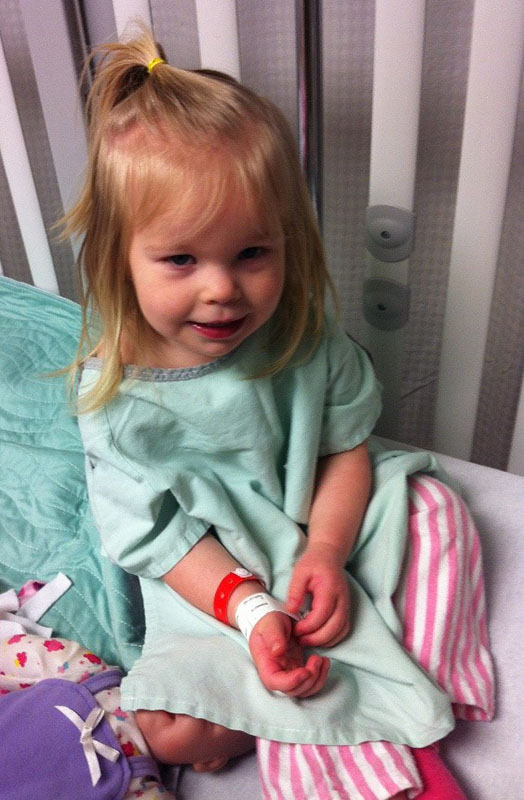
Watch this video story of a pediatric nurse who was once a pediatric patient.
Former Children's Hospital Patient Becomes a Pediatric Nurse
Or this video of a pediatric cancer patient who created the "bald board."
Tell Me a Story: Cancer Patient Inspires Pediatric Oncologist
Talk to a friend or colleague about what the video revealed to you about caring for pediatric patients.

Dr. Seuss (1954). Horton hears a who. New York, NY: Random House.
Johnson, J. Y., & Keogh, J. (2009). Pediatric nursing demystified. Columbus, OH: McGraw-Hill. Retrieved from http://0-site.ebrary.com.aupac.lib.athabascau.ca/lib/athabasca/detail.action?docID=10355313
Last updated: January 16, 2019 ©Copyright 2017 Athabasca
University
For questions, comments or to report broken links, email: cnhsweb@athabascau.ca