Unit 7: Genitourinary and Gastrointestinal Health Alterations
7.1 Overview | 7.2 Video | 7.3 Unit Learning Outcomes | 7.4 Genitourinary System | 7.5 Gastrointestinal System | 7.6 References

7.1 Overview
Important considerations associated with health alterations of the genitourinary and gastrointestinal systems range from life threatening fluid and electrolyte imbalances to social isolation that may result from loss of control over bowel or bladder function. The nurse's roles in providing care for people with genitourinary and gastrointestinal disorders include patient and family education, and social and emotional support.
7.2 Video
Coming Soon!
7.3 Unit Learning Outcomes
After completing Unit 7, you will be able to:
- summarize the anatomy and physiology of the genitourinary and gastrointestinal systems;
- describe common genitourinary conditions and nursing care of patients with associated surgeries;
- describe common intestinal disorders and nursing care of patients with associated surgeries;
- examine strategies for providing nursing care for a patient with an ostomy;
- describe nursing care of a dialysis patient;
- outline the stressors and body image issues that patients with ostomies may experience; and
- outline the discharge teaching priorities for patients who have surgeries involving the bladder or bowel.
7.4 Review of Anatomy and Physiology of the Genitourinary System, Common Genitourinary Conditions, and Nursing Care of Patients with Associated Surgeries
Ensure at a minimum you know:
- various laboratory and diagnostic evaluations related to the genitourinary system such as urinalysis, urine culture, 24-hour urine test, creatinine clearance, nuclear studies, and endoscopic procedures;
- the clinical manifestations and management of various renal disorders such as chronic kidney disease, acute nephritic syndrome, glomerulonephritis, nephrotic syndrome, polycystic kidney disease, acute renal failure, chronic renal failure, and renal cancer;
- the nursing care of patients with associated surgeries including monitoring for complications and management of pharmacological and nutritional therapies;
- the nursing care of patients receiving dialysis (hemodialysis, peritoneal dialysis);
- discharge teaching priorities for patients who have genitourinary surgeries;
- the nursing management of patients with urinary tract infections, urinary incontinence and retention, including pharmacology therapy;
- how to assess female and male reproductive systems; and
- the nursing management of female and male reproductive disorders
Learning Activities
1. Review the chapters in the course textbook on the assessment of renal and urinary tract function and the management of patients with renal and urinary disorders. In addition, review the chapters in the course textbook on the assessment and management of female and male physiologic process and reproductive disorders.
2. Mastery Level Quizzes Complete mastery practice quizzes in the following Nursing Topic Chapter in PassPoint: Genitourinary Disorders. Aim to achieve mastery level 6- 8. Keep track of your achievements!
3. Focus on Nursing Interventions
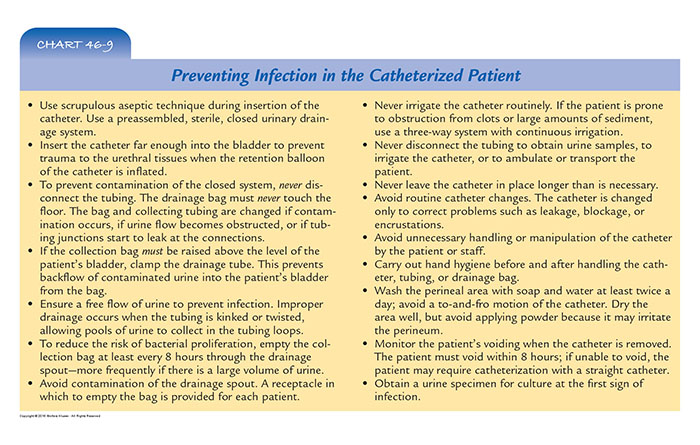
Review your knowledge regarding intermittent and indwelling urinary catheterization. Find resources in your clinical agency or consult a clinical skills text. Reflect on strategies for the prevention of catheter acquired urinary tract infections (CAUTI).(AHS – Clinical Care Topic)
4. Medication Math Moments
Work through the following case scenario of Mr. Elektrolite. You are his nurse.
One week has passed and you are assigned to Mr. Elektrolite. On your initial shift assessment, you notice that Mr. Elektrolite has had major weight loss and you assess that Mr. Elektrolite looks emaciated and has not been eating very much. You report your findings and the health care team consults a dietician. The dietician has made recommendations and the unit doctor has approved the patient care orders.
You will be inserting a small-bore feeding tube for enteral nutrition. Mr. Elektrolite will receive a formula via the NG tube beginning initially at 25 mL/hr for 24 hours, then increasing by 25 mL/hr every 4 hours with a goal rate of 75 mL/hr. Sterile water flushes of 90 mL are to be completed every four hours for the duration of the enteral nutrition infusion. Mr. Elektrolite continues to receive IV ceftriaxone 1 gram daily (mixed in a 100 mL mini bag) as well as IV metronidazole 500 mg/100 mL twice a day. Mr. Elektrolite also remains on an IV continuous heparin infusion at 13.7 mL/hr. His PTT results remain therapeutic; thus, no changes are anticipated. At this time, Mr. Elektrolite seems to be only tolerating sips of water of non-significant amounts. He is also on an oral fluid-restriction of 500 mL per day.
Complete the following. Include the units of measurement in your answers. Click on the question to see the answer.
For the first 24 hours of the enteral nutrition, how much fluid will Mr. Elektrolite receive via his NG tube (enteral nutrition plus sterile water flushes)?
Tube feed: 25 mL x 24 hrs = 600 mL
Free water flushes = 90 mL q4H = 90 mL x 6 = 540 mL
For the first 24 hours of enteral nutrition, how much volume (mL) will Mr. Elektrolite receive from his IV medications and infusions
628.8 mL
(100 ml ceftriaxone) + (100 mL metronidazole x 2) + (13.7 mL/hr (heparin) x 24 hours) = 100 mL + 200 mL + 328.8 mL = 628.8 mL total
What is the total fluid intake (in the first 24 hours) if Mr. Elektrolite also drank one orange juice (125 mL), one coffee (150 mL) and free water (250 mL)?
2293.8 mL
1140 mL + 628.8 mL + (125 mL + 150 mL + 250 mL) = 2293.8 mL total
After the initial 24 hours, the rate of Mr. Elektrolite's enteral nutrition infusion needs to be increased by 25 mL/hr every 4 hours to a goal rate of 75 mL/hr. You complete the first adjustment at 1100. What is the rate you adjust it to at 1100?
50 mL/hr
Order is to increase Tube feed rate by 25mL/hr every 4 hours = 50 mL /hr
When is the next time of adjustment?
1500 hours
1100h + 4hrs = 1500h
At what time is the goal rate reached?
1500 hours
At 1500h tube feed rate is increased to 75 mL/hr, which is the goal rate
Once the goal rate is reached of 75 ml/hr, what will be the total fluid intake of enteral nutrition, sterile water flushes, and IV medications and infusions, over 24 hours?
TF = 75mL/hr x 24 hrs
Free water flushes = 90 mL x 6
Heparin infusion = 13.7 mL/hr x 24 hrs
(75 mL/hr x 24) + (90 mL x 6) + (100 mL ceftriaxone) + (100 mL metronidazole x 2) + (13.7 mL/hr x 24 hours) = 1800 mL + 540 mL + 100 mL + 200 mL + 328.8 mL = 2968.8 mL total
Over the 24 hours (in question 5), Mr. Elektrolite drank one coffee (150 mL) and 300 mL of free water, as well as voided 1200 mL over 24 hours. What is Mr. Elektrolite's net fluid balance?
2218.8 mL
[2968.8 mL + (150 mL + 300 mL)] - 1200 mL = 2218.8 mL
Is it positive or negative?
Positive. Mr. Elektrolite's intake exceeded his output.
Supplemental Learning Activities
1. Review the various Student Resources related to the textbook in thePoint®
2. Some resources that you might find useful:
- Renal System Physiology
- Evaluation of the Renal Patient
- Hemodialysis
- Kidney Disease
- Urinary Tract Infection: An Overview of the Infection and the Associated Risk Factors
3. To learn more about urological surgery, here are some interesting resources.
7.5 Anatomy and Physiology of the Gastrointestinal System and Common Intestinal Disorders and Nursing Care of Patients with Associated Surgeries

Ensure at a minimum you know:
- the physical assessment, various laboratory (serum, stool, breath) and diagnostic evaluations related to the gastrointestinal system;
- the common disorders of the upper gastrointestinal system, such as diverticulum, GERD, cancer of the esophagus;
- the nursing management and care of various gastric tubes;
- the indications for, the insertion and removal of, and the care of nasogastric tubes;
- the indications and role of parenteral nutrition and monitoring of patients receiving parenteral therapy;
- four types of Central Venous Access Devices (CVADs);
- the care of patients with common gastric and duodenal ulcers such as gastritis and peptic ulcer disease, including pharmacologic and surgical management;
- about gastric cancer and surgery;
- the care of patients with intestinal and rectal disorders (such as constipation, diarrhea, fecal incontinence, irritable bowel syndrome, malabsorption, appendicitis, diverticular disease, peritonitis, Crohn's disease, ulcerative colitis, small and large bowel obstruction, and colorectal cancer); and
- the nursing care and prevention of complications for a patient with an ileostomy or colostomy.
Learning Activities
1. Review the chapters in the course textbook on the assessment of digestive and gastrointestinal system; management of patients with oral and gastrointestinal disorders; gastrointestinal intubation and special nutritional modalities; management of patients with gastric and duodenal disorders; and management of patients with intestinal and rectal disorders.
2. Review the various Student Resources related to the textbook in thePoint® .
3. Focus on Nursing Interventions
Review your knowledge regarding the insertion and confirmation of placement of nasogastric (NG) tubes. Focus your review on gastrointestinal intubation, care of the patient who has a nasogastric or naso-enteric tube and enteral feedings. Find resources in your clinical agency or consult a clinical skills text.
4. Focus on Nursing Interventions
Review your knowledge regarding four types of Central Venous Access Devices (CVADs): short term non-tunnelled central catheters, peripherally inserted central catheters (PICC), long term tunnelled central catheters, and implanted vascular access ports (IVAD). Find resources in your clinical agency or consult a clinical skills text.
5. Focus on Nursing Interventions
Review your knowledge regarding both types of parenteral nutrition: total parenteral nutrition and peripheral parenteral nutrition. Find resources in your clinical agency or consult a clinical skills text.
6. Focus on Nursing Interventions
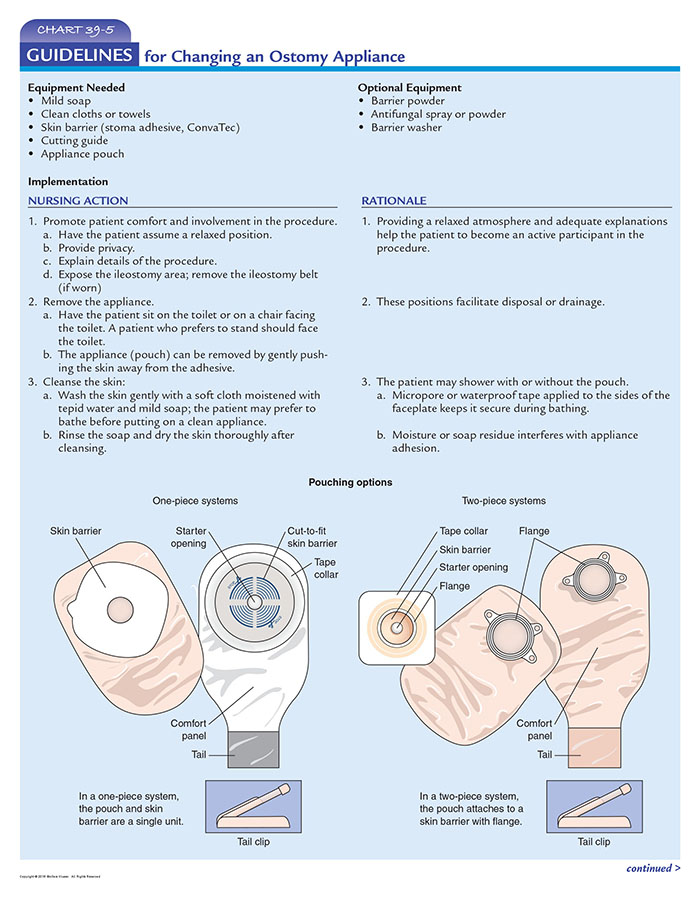
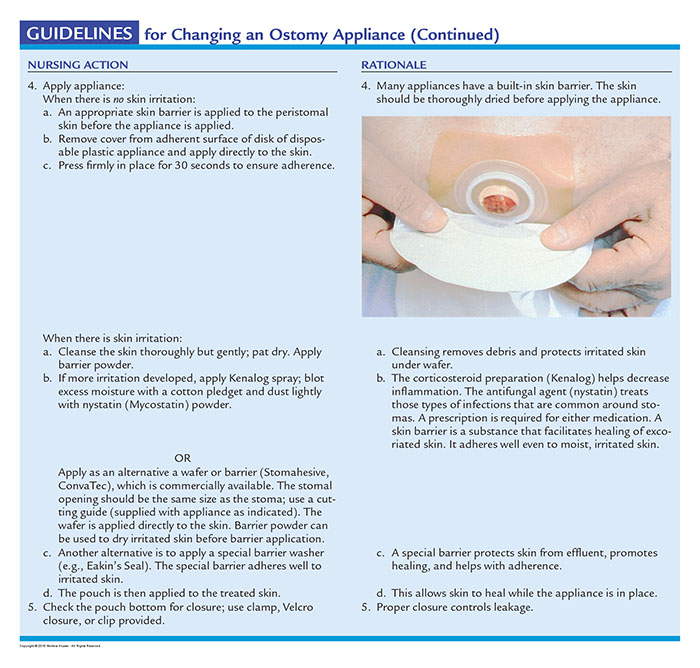
Review your knowledge regarding nursing care of patients with ostomies. Find resources in your clinical agency or consult a clinical skills text.
7. Reflection Moment
Take some time to reflect. Consider this video about successful gastric bypass surgeries from the patient's perspective. What are your personal views about this type of surgery for weight loss? Share your thoughts in your learning journal or in the Unit 7 Forum.
Supplemental Learning Activities
1. Mastery Level Quizzes
Complete mastery practice quizzes in the following Nursing Topic Chapter in PassPoint: Gastrointestinal Disorders
2. Some resources that you might find useful are listed below:
3. Review the Registered Nurses of Ontario Guidelines and Best Practice for Ostomy Management.
Reflect on the following questions:
- What new information did you learn?
- What changes will you make to your practice?
- What is the importance of knowing the developmental stage of a patient who has a new ostomy?
- How will you use this to help with body image issues and what are the most important discharge teaching focuses for the patient?
Feel free to share your thoughts in the Unit 7 Forum.
7.6 References
Alberta Health Services. (n.d.). Urinary catheter management: All ages-all locations. https://www.albertahealthservices.ca/cgv/Page16666.aspx
Hechanova, L.A. (2022, September). Hemodialysis. Merck Manual Professional Version. https://www.merckmanuals.com/professional/genitourinary-disorders/renal-replacement-therapy/hemodialysis?qt=dialysis&alt=sh
Khan Academy. (n.d.). Renal system physiology. https://www.khanacademy.org/test-prep/nclex-rn/rn-renal-system
Maddukuri, G. (2022, September). Evaluation of the renal patient. Merck Manual Professional Version. https://www.merckmanuals.com/professional/genitourinary-disorders/approach-to-the-genitourinary-patient/evaluation-of-the-renal-patient
Merck Manual Professional Version. (n.d.). Gastrointestinal disorders. http://www.merckmanuals.com/professional/gastrointestinal_disorders.html
Narayan, R. (n.d.). Colon, rectum and anus [Video]. Khan Academy. https://www.khanacademy.org/science/health-and-medicine/human-anatomy-and-physiology/Gastrointestinal-system-introduction/v/colon-rectum-anus
National Institute of Diabetes and Digestive and Kidney Diseases. (n.d.). Kidney disease. https://www.niddk.nih.gov/health-information/kidney-disease
Paul, P., Day, R.A., & Williams, B. (2016). Brunner and Suddarth's Canadian textbook of medical-surgical nursing (3rd ed.). Philadelphia, PA: Wolters Kluwer.
Registered Nurses of Ontario (2019). Supporting Adults who anticipate or live with an ostomy. Second edition. http://rnao.ca/sites/rnao-ca/files/Ostomy_Care__Management.pdf
UChicago Medicine. (n.d.). Minimally invasive & robotic urologic surgery. https://www.uchicagomedicine.org/conditions-services/urology/mis-robotic-urologic-surgery
Vasudevan, R. (2014). Urinary tract infection: An overview of the infection and the associated risk factors. Journal of Microbiology Experimentation, 1(2), 42-54. https://doi.org/10.15406/jmen.2014.01.00008