Unit 4: Cardiac and Peripheral Vascular Related Health Alterations
4.1 Overview | 4.2 Video | 4.3 Unit Learning Outcomes | 4.4 Anatomy and Physiology Review | 4.5 Cardiovascular System Disorders | 4.6 Peripheral Vascular System Disorders | 4.7 Circulatory System Shock | 4.8 Assignment 2 | 4.9 References

4.1 Overview
Cardiovascular disease is regarded as the second leading cause of death for Canadians, thus placing a great strain on the health care system (Public Health Agency of Canada, 2017). According to the World Health Organization (2017) many of the risk factors associated with cardiovascular disease such as tobacco exposure, obesity, physical inactivity, unhealthy diets, and harmful use of alcohol can be modified by individuals.
The Public Health Agency of Canada (2017) explains that the term cardiovascular disease includes six conditions affecting the circulatory system including: ischemic heart disease, cerebrovascular disease, peripheral vascular disease, heart failure, rheumatic heart disease, and congenital heart disease. Nursing management of cardiovascular health requires assessment skills, knowledge of diagnostic procedures, implications of test results, and knowledge of the anatomy, physiology, and pathologies of the heart and affiliated organs and structures.
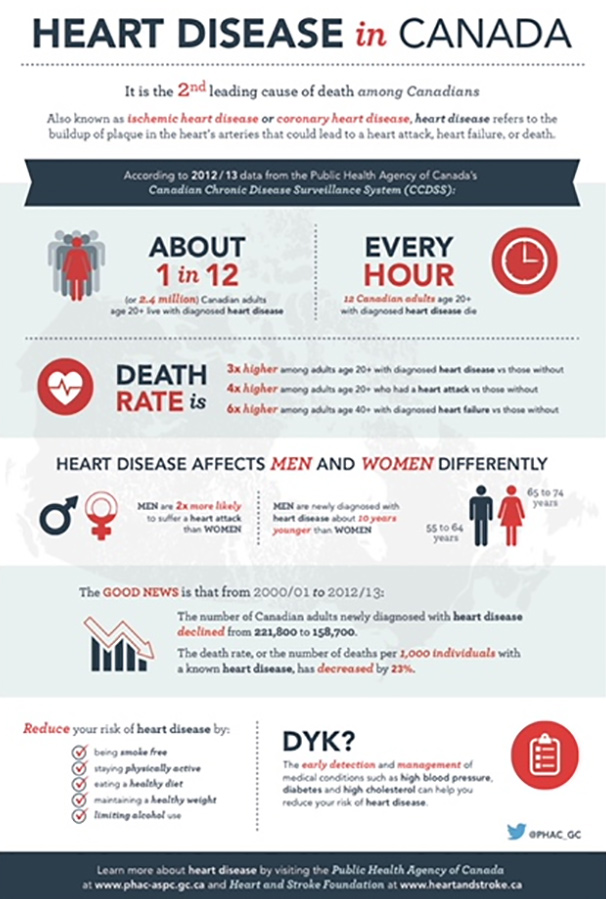
(Public Health Agency of Canada, 2022)
Additionally, as you progress through the role change from LPN to RN, you will add to your existing knowledge and skill base, related to: assessments, disease processes, prevention strategies, medication management, and patient teaching priorities, when caring for a person with cardiovascular disease.
4.2 A Personal Story Video
4.3 Unit Learning Outcomes
After completing Unit 4, you will be able to:
- explain the management of patients with cardiovascular diseases such as coronary artery disease, myocardial infarction, angina, heart failure and peripheral arterial diseases and associated conditions such as hypertension, venous thrombosis and thrombophlebitis, and aneurysm;
- examine linkages between the lymphatic and the cardiac systems;
- identify effects of stress on people with cardiovascular disease;
- investigate current statistics and trends related to modifiable risk factors for cardiac diseases;
- incorporate the knowledge of cardiac medications in the care of patients with multiple medications; and
- consider the stress on the family when a family member is hospitalized due to cardiac and peripheral vascular health alterations.
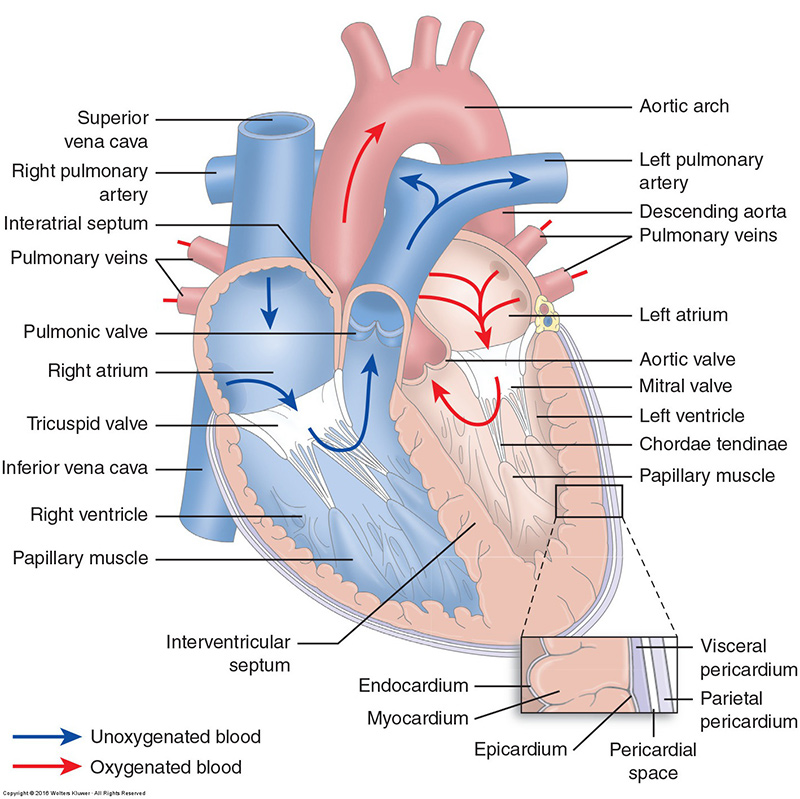
4.4 Anatomy and Physiology Review: Cardiovascular System
Ensure at a minimum you know
- the anatomy of the heart, structure of the heart wall, valves, chambers, and conduction system;
- the three phases of the cardiac cycle, normal and abnormal heart sounds, and the pacemaker function including depolarization rate;
- about cardiac output, including regulation of heart rate, effects of aging on the heart, and the functions of arteries and veins in relation to blood circulation;
- how blood flows through the heart;
- the lymphatic system function and its relation to the circulatory system;
- the accurate assessment of chest pain;
- the laboratory values used to assess the cardiovascular system including cardiac biomarkers (Troponin, CK-MB), BNP, Lipid profiles, electrolytes, BUN, C-reactive protein; and
- the diagnostic tests used to assess the cardiovascular system including ECG, telemetry, Echo, stress tests, cardiac catheterization, and hemodynamic monitoring.
Learning Activities
- Review the chapter in the course textbook on assessment of cardiovascular function, including the anatomy and physiology of the cardiovascular system as well as diagnostic tests and laboratory values used to assess the cardiovascular system.
- Review the various Student Resources related to the textbook in thePoint®.
- Reflection Moment Take a moment to reflect. How is technology changing nursing care? What technology do you use to provide excellent nursing care? Are there any potential issues? One product is called iStethoscope. It claims to turn your iPhone or iPod touch into an electronic stethoscope. Search for information about this product and others like it. What are the pros and cons of using products like these? Feel free to post your reflections to the Unit 4 Forum.
Supplemental Learning Activities
- Mastery Level Quizzes Complete mastery practice quizzes in the following Nursing Topic Chapter in PassPoint: Cardiovascular Disorders.
- Review the following video on Cardiac cycle Blood Flow Through the Heart (Made Easy in 5 Minutes!) - YouTube
- Test your knowledge by completing the online assessment tools below.
- Search for online audios of various heart sounds and murmurs. Please feel free to share with your peers in the Unit 4 Forum. Try this one to start!
Easy Auscultation
You may also want to get your stethoscope out and listen to your own heartbeat. What do you hear? Can you differentiate between S1 and S2?
4.5 Pathology and Nursing Management of Patients with Cardiovascular System Disorders
Ensure at a minimum you know
- the foundational elements of the ECG and typical rhythms;
- the care of a patient with dysrhythmia, pacemakers, ICD, and catheter ablation therapy;
- the indications of cardiovascular disorders that require emergent care and how to proceed;
- the modifiable and unmodifiable risk factors for heart disease;
- the potential outcomes of coronary artery blockage;
- the effects of arteriosclerosis in relation to hypertension;
- the process of arteriosclerosis and different types of angina and related nursing management including pharmacologic therapy (i.e., nitroglycerin, beta blockers, calcium channel blockers, antiplatelet, and anticoagulant therapy);
- the management of the patient experiencing myocardial infarction including: clinical manifestations, laboratory tests, pharmacologic therapy, and cardiac rehabilitation;
- the care of a patient pre/post an invasive coronary artery procedure (angioplasty, CABG);
- the difference between right sided and left sided classifications of heart failure;
- pharmacologic therapy for heart failure including: ACE inhibitors, beta-blockers, diuretics, and vasodilators, as well as nutritional and oxygen therapy;
- the management of complications such as cardiogenic shock, thromboembolism, pericardial effusion, cardiac tamponade, and cardiac arrest;
- the processes related to inflammatory cardiac disorders;
- the differences between pericarditis, endocarditis, and cardiomyopathy;
- the pathology related to mitral stenosis, mitral regurgitation, mitral valve prolapse, aortic stenosis, and aortic regurgitation;
- about structural processes, such as septal defects and cardiomyopathies;
- the normal and abnormal findings from a cardiac system assessment;
- the compensation mechanisms for cardiac output;
- the pathology, classification, potential complications, and management of patients with hypertension;
- the various classes of pharmacological agents; and
- the mechanisms of actions, dosage ranges, and nursing assessments and evaluations related to the various cardiac drug classes.
Learning Activities
1. Review the chapters in the course textbook for content related to the management of patients experiencing the following: dysrhythmias and conduction problems; coronary vascular disorders; structural, infection, and inflammatory cardiac disorders; complications from heart disease, and hypertension.
2. Review the various Student Resources related to the textbook in thePoint® .
3. Medication Math Moments
Work through the following case scenario of Mr. Elektrolite. You are his nurse. If you are unsure how to answer a math question review the Medication Safety and Calculation Module.
The physician is not satisfied with Mr. Elektrolite’s level of diuresis as the extra fluid in his lungs is affecting his cardiac output. She orders the furosemide to be a continuous IV infusion at 10mg/hr. Furosemide is available in 40mg/4mL ampoules.
Complete the following. Include the units of measurement in your answers.
The parenteral monograph for furosemide indicates that the provincial standard concentration for continuous IV infusion for adults is 100mg/100mL (1mg/mL). What volume (mL) of furosemide will you draw up and add to the 100 mL mini-bag?
10 mL *Note you will have to remove the same amount from the mini-bag prior to adding the furosemide*
40mg = 100mg => (40mg) x (x mL) = 100 mg x 4 mL
4 mL x mL
X = 400 mg.mL = 10 mL
40 mg.mL
How many ampoules will you require for this dose? Be exact
2.5 ampoules
10 mL vol required = 2.5 ampoules
4 mL/ampoule
You are ready to start the continuous infusion. What flow rate (mL/hr) will you program into the IV pump?
10 mL/hr
Initiate @ 10mg/hr
concentration of furosemide infusion @ 100mg/100mL = 1mg/mL
10mg = 1mg => 10mg.mL => 10mL/hr
hr mL mg.hr
The parenteral monograph states to administer at rates up to a maximum of 4mg/minute for continuous IV infusion for adults. Does the flow rate you chose in Question 3 meet those parameters?
Yes
10mg = 0.2 mg/min which is less than 4mg/min
60mins
If the physician decided to change the order to 30 mg/hr continuous IV infusion the next day, what would be the new flow rate (mL/hr)?
30 mL/hr
30 mg = 1 mg => 30 mg.mL = 30 mL/hr
hr mL 1 mg.hr
What does cardiac output measure?
Amount of blood pumped by the heart per minute. Heart Rate x Stroke Volume= Cardiac Output (L/min)
4. Review medications commonly prescribed for patients with cardiac conditions. Start by looking at the list of medications on The Heart and Stroke Foundation of Canada (2018).
Once you have a list of medications, review these in more depth using resources written for RNs.
Complete this exercise. (Downloadable version here). Name examples of each class of medications and state the actions, dosage, and nursing interventions. Note contraindications and use of each medication. Feel free to develop and adjust the table as per your learning needs and style.
Drug Class |
Common Dosages, Routes, Onset & Peak of Therapeutic Effects |
Mechanisms of Action |
Indications for Use |
Potential Adverse Effects and Interactions |
Nursing Considerations |
Antiarrhythmic medications |
|
|
|
|
|
Angiotensin receptor blockers (ARBs) |
|
|
|
|
|
Angiotensin converting enzyme (ACE) inhibitors |
|
|
|
|
|
Diuretics |
|
|
|
|
|
Beta Blockers |
|
|
|
|
|
Calcium Channel Blockers |
|
|
|
|
|
Nitrates |
|
|
|
|
|
Also consider examples of drugs used for the following: Antianginal agents |
|
|
|
|
|
5. Reflection Moment
Take a moment to reflect. What is your present practice in family care with families experiencing cardiac issues? Have you had any personal experience with a significant other requiring cardiac intervention? Would the management and care received be the same or different, now that you have expanded your knowledge and if you were the nurse assessing and providing care? Feel free to post your reflections to the Unit 4 Forum.
Supplemental Learning Activities
- Mastery Level Quizzes
- Review common Conditions | Heart and Stroke Foundation
Complete mastery practice quizzes in the following Nursing Topic Chapter in PassPoint or PrepU: Cardiovascular Disorders.
4.6 Pathology and Nursing Management of Patients with Peripheral Vascular System Disorders Anatomy and Physiology Review
Ensure at a minimum you know
- the assessment of peripheral pulses commonly affected in peripheral vascular diseases (PVD); causes and conditions associated with PVD; risk factors, symptoms, diagnostics, complications, and prevention;
- which PVDs require emergent/urgent care and knowledge of how to proceed;
- the diagnostic evaluations, including laboratory tests, associated with PVD;
- about chronic venous stasis and related wound care management;
- the factors affecting circulation such as resistance, vasoconstriction, and viscosity;
- the effects of aging on the vascular system;
- the common sites and pathological changes associated with PVD;
- the association between PVD and diabetes;
- the complications of diabetes that affect the lower limbs and feet;
- the modifiable factors in prevention of a diabetic foot ulcer ;
- the challenges with healing foot ulcers;
- the risk factors for foot ulcer development; and
- the management, teaching, and interventions would be included in foot care.
Learning Activities
1. Review the chapter in the course textbook on assessment and management of patients with vascular disorders, problems of peripheral circulation, and review of the anatomy and physiology of the peripheral vascular system
2. Review the various Student Resources related to the textbook in thePoint® .
Supplemental Learning Activities
1. Here is an online resource that might help you, Peripheral Vascular Disease and Peripheral Arterial Disease
4.7 Circulatory System Shock
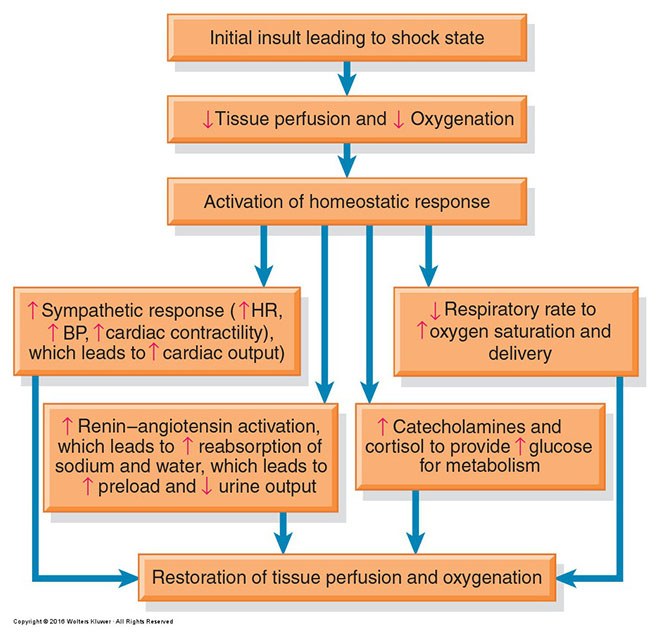
Patients may experience shock. This is an emergent situation that requires skilled nursing assessment and intervention.
Ensure at a minimum you know
- the stages and types of shock;
- the clinical manifestations and nursing management of patients experiencing shock; and
- fluid replacement interventions.
Learning Activities
1. Review the various Student Resources related to the textbook in thePoint® .
2. Review the chapter in the course textbook on shock and multiple organ dysfunction syndrome.
Supplemental Learning Activities
1. To learn more about the pathophysiology, assessment, and treatment of circulatory system shock, watch this Khan Academy video.
2. Reflect on three important things you need to remember about this type of shock. Feel free to share your thoughts and/or professional experiences with your peers in the Unit 4 Forum.
4.8 Assignment 1: Concept Map and Case Analysis
Nursing Care of Patients with Cardiovascular Disorders
Use the textbook chapters and other sources of evidence to create a concept map of this case scenario.
See |Assessment Overview| Once completed, submit to Assignment 1 Drop Box. You may want to go back to Unit 1 and review the content regarding concept map development. Complete details of this assignment are available on the course home page in Assessment Overview.
4.9 References
Heart and Stroke Foundation of Canada. (n.d.). Conditions. https://www.heartandstroke.ca/heart-disease/conditions?gclid=Cj0KCQjwkIGKBhCxARIsAINMioLU3tOC6NTXxD79SKGmhD-wzYqjPXT61KhGNPbsv_iIBf_Hag3p1QEaAhHxEALw_wcB&gclsrc=aw.ds
Heart and Stroke Foundation of Canada. (n.d.). Treatments. http://www.heartandstroke.ca/heart/treatments
ICU Advantage. (2020, October 6). Blood flow through the heart. [Video]. https://youtu.be/aDXABSb0_p8
John Hopkins Medicine Health Library. (n.d.). Peripheral vascular disease. https://www.hopkinsmedicine.org/healthlibrary/conditions/cardiovascular_diseases/peripheral_vascular_disease_85,P00236
Mannarino, I. (n.d.). Cardiogenic shock. [Video]. Khan Academy. https://www.khanacademy.org/science/health-and-medicine/circulatory-system-diseases/shock/v/cardiogenic-shock
mpochet. (2009, March). Health assessment test 2 – heart and peripheral vascular system. Quizlet. https://quizlet.com/819983/health-assessment-test-2-heart-and-peripheral-vascular-system-flash-cards/
Public Health Agency of Canada. (2017). About heart diseases and conditions. https://www.canada.ca/en/public-health/services/diseases/heart-health/heart-diseases-conditions/about-heart-diseases-conditions.html
Public Health Agency of Canada. (2022). Heart disease in Canada. https://www.canada.ca/en/public-health/services/publications/diseases-conditions/heart-disease-canada.html
Teo, K.K. (2022, September). Peripheral arterial disease. Merck Manual Professional Version. https://www.merckmanuals.com/en-ca/professional/cardiovascular-disorders/peripheral-arterial-disorders/peripheral-arterial-disease?query=peripheral%20vascular%20disease
World Health Organization. (2021, June 11). Cardiovascular diseases. http://www.who.int/mediacentre/factsheets/fs317/en/