Unit 2: Hematology, Immunology, and Oncology Health Alterations
2.1. Overview | 2.2. Video | 2.3. Unit Learning Outcomes | 2.4 Oncology | 2.5. Hematologic Disorders | 2.6 Mr. Elektrolite | 2.7 Immunodeficiency | 2.8 Allergic Disorders | 2.9. References

2.1 Overview
The focus of this unit is alterations in hematopoietic and immune system function. In part, this includes hematologic disorders and treatments, administration of blood products, immune system alterations, and oncologic nursing. Priorities for nursing care in this population include the lack of oxygenated blood flow, risk of hemorrhage, and hypersensitivity and allergic reactions.
The hematology system is different from other body system because "it encompasses the entire human body" (Paul et al., 2016). Blood disorders may be life-threatening with some having few or no symptoms. The nurse's knowledge of pathophysiology and laboratory value interpretation is important in the care of such patients. Generally, the nursing management of patients with hematologic and immune system disorders is focused on activity intolerance, ineffective tissue perfusion, and effective or ineffective patient therapeutic regime management. In addition, it is imperative that nurses understand procedures for safe administration of blood and blood products.
The immune system defends the body against invading microorganisms, parasites, cancer cells and transplanted tissues (Delves, 2017). Foreign substances the body considers harmful are called antigens and stimulate an immune response (Delves, 2017). An allergy (or hypersensitivity) occurs when the immune system generates an exaggerated response to a foreign substance that for a non-allergic person the body considers harmless (Paul et al., 2016). These allergy-producing substances are allergens such as dust, mould, foods or medications. Responses to allergens range from minor irritations such as rhinitis to anaphylactic reactions (World Allergy Organization, 2018). Nursing care focuses on assisting patients to live with the allergy including managing exposure and planning treatment.
Cancer affects many people of all ages. There are various factors associated with cancer as well as a multitude of treatments and prognoses. The scope of practice of cancer nursing practice or oncology nursing is far-reaching and complex. Oncology nurses need to face their own values and beliefs regarding the nursing management of cancer as well as help patients, families and communities deal with the various stages and situations in cancer care.

On Being a Cancer Nurse
Every day you fight a battle against
physical, emotional, and spiritual collapse
yours and your patients.
Each day is infused with an intensity,
A sense of urgency.
Waves of emotion wash over you
as you move from situation to situation.
At first you are never sure if
the next experience might be the big one,
the one that overwhelms you.
Eventually you find that from each
encounter you emerge stronger,
more sure of your abilities,
confident enough to carry on for the next day,
and probably the day after that.
(Perry, 2009, p. 200)
2.2 A Personal Story Video
2.3 Unit Learning Outcomes
After completing Unit 2, you will be able to
- describe the etiology, diagnosis, and treatment of common hematologic disorders;
- explain safe competent nursing care for patients experiencing hematologic dysfunction;
- describe safe competent nursing care for patients receiving blood and blood products;
- outline safe competent nursing care for patients with alterations in immune system functioning;
- describe nursing care required by patients with allergies to assist them in managing exposure and planning treatment;
- outline safe competent nursing care and pain management for patients experiencing cancer;
- describe the various types of Central Venous Access Devices and outline safe competent nursing care related to CVADs; and
- integrate relevant laboratory values, diagnostic tests, and pharmacological treatments related to the unit topics.
2.4 Oncology: Nursing Management in Cancer Care

Ensure at a minimum you understand
- an overview of cancer including causes, symptoms, and treatments for common types;
- pathophysiology of the malignant process, invasion and metastasis;
- role of the immune system in relation to cancer tumour growth;
- Identify and describe the different types of breast disorders, both benign and malignant;
- pain management interventions and nutritional considerations; and
- nursing care of patients with various types of Central Venous Access Devices (CVADs).
Learning Activities
- Review the chapter in the course textbook about nursing management in cancer care including predisposing factors, causes, and treatments for cancer.
- Review the various Student Resources related to the text book in thePoint®
- Reflection Moment: Reflect on the role of an RN when caring for a newly diagnosed cancer patient. How do you think your care could be different? Write your reflections in a journal or post a narrative/video to the Unit 2 Forum.
- Focus on Nursing Interventions: Review your knowledge related to Central Venous Access Devices (CVADs). What have you learned from your work experience? Review the CVAD’s in the course textbook, and your agency's clinical practice guidelines about the management of various CVADs.
Supplemental Learning Activities
- Mastery Level Quizzes: Complete mastery practice quizzes in PassPoint on Oncologic Disorders (refer to the Course Introduction for more information about the recommended resources for master level quizzes). Remember to keep track of your achievements!
- Review further content at Merck Manual Overview of Cancer
- Find a credible professional or academic resource about Central Venous Access Devices (CVADs). Find one through your work place or health care agency. Share what you find with your peers in the Unit 2 Forum.
2.5 Assessment and Management of Patients with Hematologic Disorders
Ensure at a minimum you understand:
- blood formation;
- blood components;
- types of immune system cells and designated functions;
- the interaction between antigens and antibodies in the immune response;
- classifications of anemia differentiating:
- anemia in renal disease
- pernicious anemia
- immune hemolytic anemia (specific to adults receiving transfusions);
- difference between acute and chronic leukemia;
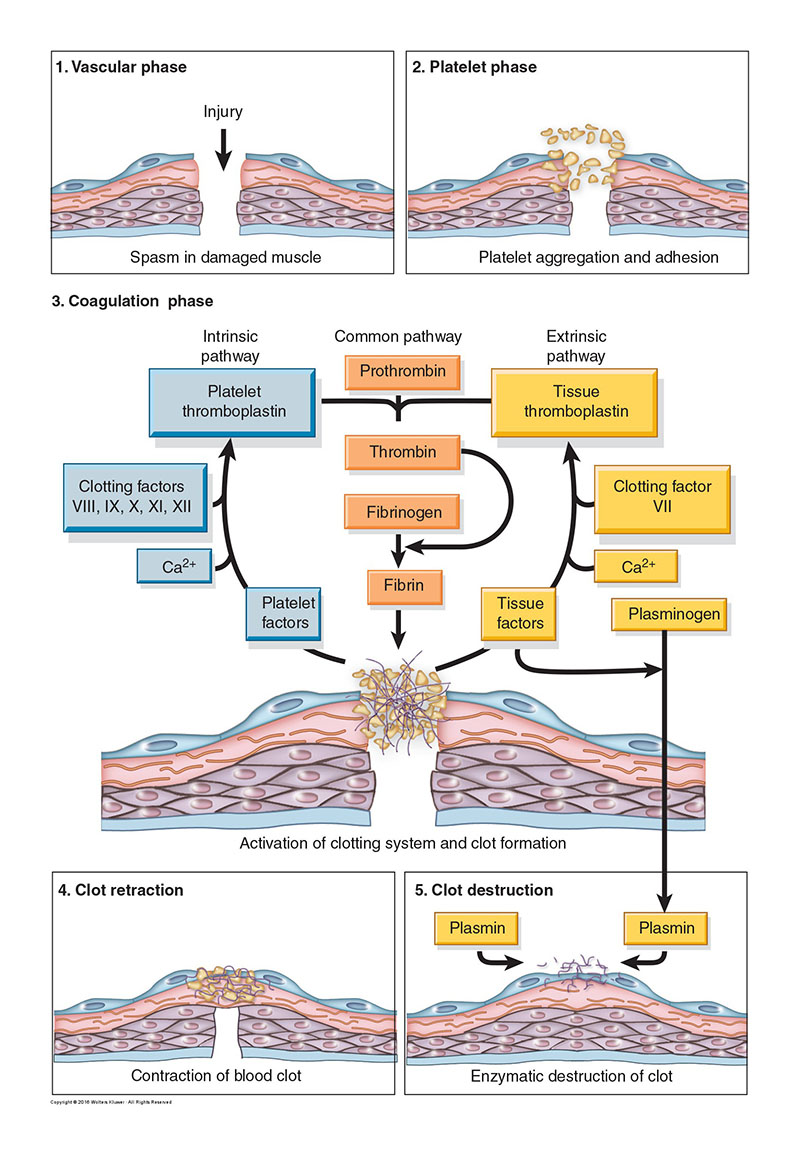
- mechanisms of clotting and homeostasis;
- etiology of, and difference between, thrombocytopenia and thrombosis;
- acquired coagulation disorders including clinical manifestation of liver disease and vitamin K deficiency in relation to coagulation; and
- nursing care of patients receiving transfusion of blood products.
Learning Activities
- Review the chapter in the course textbook on the assessment and management of patients with hematologic disorders.
- Focus on Nursing Interventions: Review and complete the Alberta Health Services Professional Development Resource on Transfusion of Blood and Blood Products. For additional information on use of blood products review the current Blood Transfusion Policy and Procedure Manual of the agency where you work.
- Play the Blood Typing Game here!
- Reflection Moment: What are the different ways an RN can function as part of the health care team in the care of patients with hematological disorders? Write your reflections in a journal, post in the Unit 2 Forum, or share a clinical story with your peers.
- Medication Math Moments: Work through the following case scenario of Mr. Elektrolite. You are his nurse.
Supplemental Learning Activities
- Mastery Level Quizzes: Complete mastery practice quizzes in the following Nursing Topic Chapters in PassPoint or PrepU: Immune Disorders and Hematologic Disorders. Remember to keep track of your achievements!
2.6 Mr. Elektrolite
Refer to the Alberta Health Services Professional Development Resource on Transfusion of Blood Components and Blood Products to help you answer some of the questions.
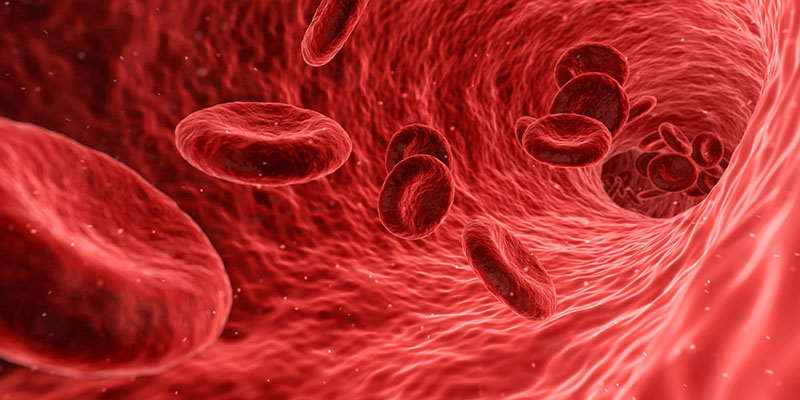
Mr. Elektrolite is a 67 year old male admitted to your unit with congestive heart failure. Relevant past medical history includes anterior ST-segment elevation myocardial infarction (STEMI) two years ago, gastro esophageal reflux disease (GERD), and gout in his right toe. Today, Mr. Elektrolite will receive 2 units of packed red blood cells (PRBC) with an IV furosemide 40 mg in between the units. You are going to initiate the 1st packed red blood cell infusion as soon as your colleague brings it to the unit.
Complete the following questions. Include the units of measurement in your answers. You may use a basic calculator only.
*Review the Medication Safety and Calculation Module if you are unsure how to answer the math questions. To see the answer, drag your cursor between the arrows.
What are some initial checks and assessments prior to the start of the infusion?
Informed consent signed, baseline vital signs, baseline physical assessment, patient wearing Transfusion Service Identification Number (TSIN), prescriber's order, confirm patient teaching completed, previous patient adverse effects, ensure the patient has appropriate IV access
The 1st unit of packed red blood cells has arrived. How do you proceed with the safety checks prior to the initiation of the blood product?
Ensure you have an IV pump and accurate blood tubing, have a second health care professional with you, check the blood product against the prescriber's order, go to the patient bedside, identify the patient using at least 2 identifiers, with your colleague check the bag label against the bag ensuring all components match, then check the label against the patient ID band and TSIN band, both health care professionals sign the label
You are ready to initiate the transfusion. The packed red blood cell unit has a total volume of 350 mL. How much maximum time do you have from the time of pick-up of the PRBCs to the end of the infusion?
4 hours
You decide to begin the infusion at a slower rate of 50 mL/hr via the IV infusion pump for the first 15 minutes of the infusion. How much volume (mL) is left in the bag at the end of the 15 minutes?
337.5 mL The total volume is 350 mL, and in 15 minutes (at a flow rate of 50 mL/hr) 12.5 mL will have infused. this leaves 337.5 mL remaining in the bag.
50mL = x mL = 50 mL x 15 mins = x mL x 60 mins
60 mins 15 mins
X = 750 mL.mins = 12.5 mL will be infused in 15 mins
60 mL.mins
Volume left in bag = 350 mL – 12.5 mL = 337.5 mL
You only have 3 hours left to complete the infusion of the first unit of blood cells. What will be the flow rate (mL/hr) that you will program into the IV pump (use the volume remaining in question 4). Round to the nearest whole number.
113 mL/hr 337.5 mL divided by 3 hours = 113 mL/hr
337.5 mL/3hrs = 112.5 mL/hr = 113mL/hr
After the initiation of the PRBC unit, when will you check the patient's vital signs? You have already completed the baseline vital signs.
After 15 minutes of the infusion, every hour during the infusion, at the end of the infusion and as needed
What is most important nursing action when a patient begins experiencing some form of adverse effects during the infusion?
Stop the infusion!
The 1st unit of PRBCs has infused. You plan to infuse the IV furosemide over 30 minutes. You have prepared the furosemide in a 50 mL mini-bag. What flow rate (mL/hr) would you program into the IV pump?
100 mL/hr To infuse 50 mL of fluid in half hour, the rate is 100 mL/hour.
50 mL = 1 hr = 3000 mins.mL = 30mins.hr => 100mL/hr
30mins 60 mins
Learning Activities
- Review the various Student Resources related to the text book in thePoint® .
Supplemental Learning Activities
- View the following video about the Coagulation Cascade.
- Think about the various anticoagulant drug therapies and where they would act on the coagulation cascade (ex: low molecular weight heparins; warfarin sodium; antiplatelet aggregators etc.) Write your reflections in a journal or post in the Unit 2 Forum.
2.7 Assessment of Immune Function & Management of Patients with Immunodeficiency

Ensure at a minimum you understand:
- assessments of the immune system and dysfunction;
- effects of some medications on the immune system (ex: antibiotics, NSAIDs, antineoplastic agents);
- clinical manifestations of patients with immunodeficiency;
- immunodeficiency in HIV disease and AIDS;
- clinical manifestations of patients with HIV; and
- nursing care of the patient with HIV or AIDS.
Learning Activities
- Review the chapters in the course textbook on the assessment of immune function, management of patients with immunodeficiency and management of patients with HIV illness and AIDS.
- Review the various Student Resources related to the text book in thePoint® .
- Reflection Moment: Why is it important to include the patient and the family in the care of patients with hematological or immune system dysfunction? What would your teaching priorities be? Write your reflections in a journal, post in the Unit 2 Forum, or share your reflective response in video format.
Supplemental Learning Activities
- Mastery Level Quizzes: Complete mastery practice quizzes in the following Nursing Topic Chapters in PassPoint: Immune Disorders and Hematologic Disorders. Remember to keep track of your accomplishments!
- Complete the Study Stack Flashcards on the Immune System. Continue to review until you can score 100% on this exercise.
- Review this Quizlet entitled Nursing Care of Patients with Altered Immunity Challenge yourself by taking the test. This is a great form of evaluation for your learning on altered immunity.
- Complete the Study Stack Flashcards on HIV and AIDS. Continue to review until you can score 100% on this exercise.
2.8 Assessment and Management of Patients with Allergic Disorders
Ensure at a minimum you understand
- differences between the 4 hypersensitivities;
- assessment for allergies;
- nursing care required by patients with allergies;
- indications of an allergic reaction that require emergent care; and
- nursing care of patients experiencing allergic reactions including anaphylaxis.
Learning Activities
- Review the chapter in the course textbook on the assessment and management of patients with allergic disorders including anaphylaxis.
- Reflection Moment: What are the commonalities of the hypersensitivities? What is anaphylactic shock?
- View the Khan Academy videos: What is shock? Shock-diagnosis and treatment, and Anaphylactic shock. Write your reflections in a journal or post in the Unit 2 Forum.
Supplemental Learning Activities
- Mastery Level Quizzes: Complete mastery practice quizzes in the following Nursing Topic Chapters in PassPoint: Immune Disorders and Hematologic Disorders.
2.9 References
Alberta Health Services. (2017, January). Professional development: Transfusion of blood components and products. https://www.albertahealthservices.ca/assets/wf/lab/wf-lab-clin-tm-manual-lm.pdfAlberta Health Services. (2022, February). Policy: Transfusion of blood components and products. https://extranet.ahsnet.ca/teams/policydocuments/1/clp-prov-transfusion-blood-product-policy-ps-59.pdf
Carson, V. [Vicena19]. (2013, February). Nursing care of patients with altered immunity. Quizlet. https://quizlet.com/20154388/nursing-care-of-patients-with-altered-immunity-flash-cards/
Delves, P. (2021, September). Overview of the immune system. Merk Manual Professional Version. https://www.merckmanuals.com/professional/immunology-allergic-disorders/biology-of-the-immune-system/overview-of-the-immune-system
Mannarino, I. (n.d.). Anaphylactic shock. [Video]. Khan Academy. https://www.khanacademy.org/science/health-and-medicine/circulatory-system-diseases/shock/v/anaphylactic-shock
Mannarino, I. (n.d.). What is shock? [Video]. Khan Academy. https://www.khanacademy.org/science/health-and-medicine/circulatory-system-diseases/shock/v/what-is-shock
Merck Manual Consumer Version. (n.d.). Cancer. https://www.merckmanuals.com/home/cancer
The Nobel Prize. (2022) The blood typing game. https://www.nobelprize.org/educational/medicine/bloodtypinggame/index.html
Paul, P., Day, R.A., & Williams, B. (2016). Brunner and Suddarth's Canadian textbook of medical-surgical nursing (3rd ed.). Philadelphia, PA: Wolters Kluwer.
Shanejpb. (2015, June 8). AIDS and the human immunodeficiency virus (HIV). Study Stack. https://www.studystack.com/flashcard-848597
Shanejpb. (2015, May 26). Immune system. Study Stack. https://www.studystack.com/flashcard-Car845365
Van Nieuwehuizen, P. (n.d.). Coagulation cascade. [Video]. Khan Academy. https://www.khanacademy.org/science/health-and-medicine/advanced-hematologic-system/hematologic-system-introduction/v/coagulation-cascade
World Allergy Organization. (2023). Allergic Disease Resource Center. http://www.worldallergy.org/adrc/