1. Overview | 2. Welcome Video | 3. Unit Learning Outcomes | 4. Learning Activities and Resources | 5. Review | 6. References
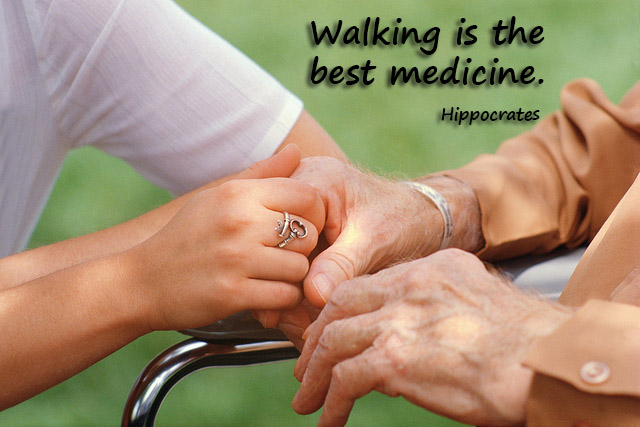
Immobility increases complications and mortality. Inoue et al. (2014) suggest a multidisciplinary team approach in preventing immobility. Mobility should be a high priority in planning nursing care. Encouraging mobility improves healing and decreases complications such as hospital-acquired infections.
Immobility is a factor in skin breakdown. The skin plays a major role in health as it forms a barrier to infection. Therefore maintaining skin integrity is critical. Changes in skin integrity and wounds are a threat to health and wellness.
Having surgery is a major event in the life of patients and their families. There are many potential surgical complications including weakness and mobility decline, pneumonia, and skin breakdown. Preventing post-op complications requires thorough regular assessment and holistic nursing care from the preoperative period through to discharge.
After completing Unit 5, you will be able to meet or exceed the following learning outcomes:
Review the anatomy and physiology of the integumentary and musculoskeletal system and disorders related to these systems using a current nursing medical-surgical textbook or other resource.
Some resources that you might find useful for this learning activity are listed here.
Anatomy of the Integumentary System
Overview of the Musculoskeletal System
Review pathology and nursing care of patients with integumentary and musculoskeletal system disorders using a current nursing medical-surgical textbook or other resource.
Ensure at a minimum you know:
Some resources that you might find useful for this learning activity are listed here.
Musculoskeletal and Connective Tissue Disorders
Musculoskeletal Disorders of the Upper Extremities due to Extensive Usage of Hand Held Devices
Complete the Study Stack Flashcards on the musculoskeletal and integumentary systems.
Learn about immobility and its complications by accessing a variety of resources. Here are some that you might find helpful.
Complications from Immobility by Body Systems
Deep Vein Thrombosis and Immobility
Test your knowledge regarding effects of immobility using this game.
Review nursing strategies to enhance mobility in a medical surgical nursing textbook or use other credible online sources. Search terms such as "prevention of immobility," "promoting mobility," and "promoting independent mobility" will lead you to useful online resources.
Ensure at a minimum you know:
Read Complications of immobility and bed rest: Prevention and management
Record strategies you have used, or are planning to use, in your reflection journal.
Review
Nursing standard of Practice Protocol: Pressure Ulcer Prevention and Skin Tear Prevention
What strategies will you use to prevent skin breakdown? Complete the table below to note your answers to this question.
Risk Factor |
Nursing Interventions |
Expected Outcomes |
Immobility |
|
|
Impaired Sensory Perception or Cognition |
|
|
Decreased Tissue Perfusion |
|
|
Altered Nutritional Status |
|
|
Friction and Shear |
|
|
Increased Moisture |
|
|
Review pre and postoperative nursing care focused on maintaining mobility and skin integrity using a current nursing medical-surgical textbook or other credible resources.
Ensure at a minimum you understand the following:
Some resources that you might find useful for this learning activity are listed below. You can locate other scholarly online resources by using search terms such as "surgical wound care," "phases of wound healing," and "nursing care of the postoperative patient."
Prospect Post op Pain Management (Hint: Look specifically for procedure specific postoperative pain management)
Prevention of Postoperative Infection (ppt show)
Complete the Study Stack Flashcards on the wound care.
5.4.7 Test Yourself: Quiz 2 (part of assignment 2)
Assignment 2 includes 6 quizzes. This is quiz 2 and it includes 25 multiple choice questions. You will complete the timed quiz on your personal computer. You have 30 minutes to complete quiz 2. To access the quiz, click the quiz 2 link on the NURS 400 course home page. Quiz 2 is valued at 5% of your course grade. You can write quiz 2 only once.
Hint: The questions for the 6 quizzes are drawn from the PassPoint bank of questions. To prepare for success in the quizzes consider logging in to your PassPoint account and doing questions for practice focusing on the unit topic. If you get a practice question incorrect you can click the "remediation" icon and you will be taken directly to content that will assist you in understanding the correct answer. Doing practice questions in PassPoint may enhance your success in the NURS 400 quizzes and in your RN NCLEX exam.
Use critical thinking skills to reflect on the following. Contact your tutor to discuss at least one of these questions or makes notes in your reflection journal.
Ayello, E., A., & Sibbald, R.G. (2012). Nursing standard of practice protocol: Pressure ulcer prevention and skin tear prevention. Hartford Institute for Geriatric Nurses. Retrieved from http://consultgerirn.org/topics/pressure_ulcers_and_skin_tears/want_to_know_more
Alberta Bone and Joint Institute. (2015). Evidence reviews. Retrieved from http://albertaboneandjoint.com/health-professionals/evidence-reviews/
Boundless. (n.d.). The integumentary system. Retrieved from https://www.boundless.com/physiology/textbooks/boundless-anatomy-and-physiology-textbook/the-integumentary-system-5/
Boundless. (n.d.). Overview of the musculoskeletal system. Retrieved from https://www.boundless.com/physiology/textbooks/boundless-anatomy-and-physiology-textbook/the-skeletal-system-7/overview-of-the-musculoskeletal-system-76/overview-of-the-musculoskeletal-system-454-9178/
Free Nurse Tutor (n.d.). Immobility and range of motion.
Retrieved from http://freenursetutor.com/menuparent-musculoskeletal-mobility-inactivity/flash-a-match-immobility-and-range-of-motion.html
Hess, C.T. (2005). Performing a skin assessment. Clinical guide: Skin & wound care (5th ed.). Philadelphia, PA: Lippincott Williams & Wilkins.
Inoue, J., Ono, R., Makiura, D., Kashiwa-Motoyama, Miyuki, Nakamura, T., Imanishi, T., Miura, Y, & Sakai, Y. (2014). Effect of multidisciplinary team approach on prevention of postoperative pulmonary complications in patients with esophageal cancer. Journal of Gastroenterology, 3(9). Retrieved from http://www.ghrnet.org/index.php/joghr/article/view/853
Johnson, R. G. (2013). Merck Manual Professional Edition. Postoperative care. Retrieved from http://www.merckmanuals.com/professional/special_subjects/care_of_the_surgical_patient/postoperative_care.html?qt=immobility&alt=sh
Khan Academy (2014). The muscular system physiology. Retrieved from https://www.khanacademy.org/test-prep/NCLEX-RN/rn-muscular-system
Khan Academy (2014). The skeletal system physiology. Retrieved from https://www.khanacademy.org/test-prep/NCLEX-RN/rn-skeletal-system
Maniere, D. (2012). Complications of immobility and bed rest: Prevention and management. Rev Prat., 62(7), 1013-1023.
Meakins, J., L. (2008). Prevention of postoperative infection. Retrieved from http://www.slideshare.net/medbookonline/acs0101-prevention-of-postoperative-infection
Prospect. (2013). Procedure specific postoperative pain management. Retrieved from http://www.postoppain.org/frameset.htm
Reimer-Kent, J. (2012). Creating a postoperative wellness model to optimize and enhance rapid surgical recovery. Canadian Journal of Cardiovascular Nursing, 22(2). Retrieved from http://0-web.ebscohost.com.aupac.lib.athabascau.ca/ehost/pdfviewer/pdfviewer?vid=9&hid=21&sid=592a3955-6c76-4ee2-b1ea-cb904d94fc3e%40sessionmgr14
Sharan, D., Mohandoss, M., Ranganathan, R., & Jose, J. (2014). Musculoskeletal disorders of the upper extremities due to extensive usage of hand held devices. Annals of Occupational and Environmental Medicine, 26(22). doi:10.1186/s40557-014-0022-3. Retrieved from http://www.aoemj.com/content/26/1/22
Study stack. (2009). Wound care. Retrieved from http://www.studystack.com/flashcard-226021
Study stack. (2014). Integumentary disorders. Retrieved from http://www.studystack.com/flashcard-197891
Study stack. (2009). Muscular disorders. Retrieved from http://www.studystack.com/flashcard-291887
Truong, A., Fan, E., Brower, R., & Needham, D. (2009). Bench-to-bedside review: Mobilizing patients in the intensive care unit – from pathophysiology to clinical trials. Critical care, 13(4). doi:10.1186/cc7885 Retrieved from http://ccforum.com/content/13/4/216
Walker, J. (2012). Care of patients undergoing joint replacement. Retrieved from http://0-web.ebscohost.com.aupac.lib.athabascau.ca/ehost/pdfviewer/pdfviewer?vid=7&hid=21&sid=592a3955-6c76-4ee2-b1ea-cb904d94fc3e%40sessionmgr14