
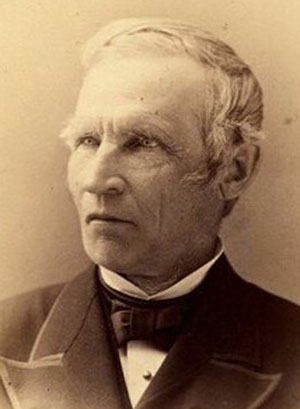
As you read this quote and work through this unit, reflect upon these questions.
Burkhardt, Nathaniel and Walton (2014) define the term philosophy as "...the intense and critical examination of beliefs and assumptions" (p. 25). Johnson and Webber (2015) note that "philosophies are broad, connected statements about beliefs and values and have the potential to guide thinking and behavior of individuals, disciplines, and societies" (p. 15).
There are many types of philosophies in nursing that provide particular perspectives related to nursing practice, education, administration, and research. Here are some questions to consider when examining nursing philosophies:
As you work through this unit, you will begin to articulate your
personal philosophy of nursing and the values and beliefs that underlie
your nursing practice. At the end of the unit, you will have the
opportunity to document your philosophy of nursing as you complete
Assignment 2 - Philosophy of
Nursing. Keep in mind that your
personal philosophy of
nursing is
likely to change over time as you reflect on your own experience as a
nurse and on the philosophies of nursing that others express.
When you have completed this unit, you should be able to:
A philosophy of nursing usually addresses three kinds of questions about nursing:
The focus of this unit centers on the first of these three questions, "What is the nature of nursing?" You have already begun to explore possible answers to this question through your reading of Florence Nightingale's (1860/1969) text, Notes on Nursing: What it is and What it is not. Continue this exploration through the following reading activities:
Read selected sections of Johnson and Webber (2015), Chapter 7, which provides an overview of the historical development of a number of nursing theories. Choose one or two theorists in each decade and read about their theories.
If you have not already done so, read the Assignment Guidelines for Assignment 2: Philosophy of Nursing - again add correct link to the updated assignment. Keep these guidelines in mind as you read Chapter 7 and work through the Learning Activities that follow.
You may recall from earlier readings in this course that terms such as model, theory, conceptual framework, and nursing philosophy are sometimes used interchangeably. As you read, or reread, Chapter 7, you will note that Johnson and Webber (2015) use the term nursing theories to refer to the works of nurse theorists included in this chapter. Other nurse scholars would consider at least some of these works to be nursing philosophies. As philosophies are based on values and beliefs and potentially guide the thinking of disciplines like nursing (Johnson & Webber, 2015), consider the values and beliefs underlying the theories you have chosen to explore in Chapter 7 of the Johnson and Webber text. Specifically give some thought to the following:
Many of the theorists whose works are included in this chapter are from the United States however four examples of Canadian nursing theories/philosophies have also been included:
Embedded in the Standards for Nursing Practice developed by each of the provincial and territorial nursing associations and/or regulatory bodies are statements about the nature of nursing. Visit the Canadian Nurses Association Web site to find a link to the Standards for Nursing Practice in your jurisdiction.
Reflect on the following questions:
In addition, explore the beliefs about nursing embedded in the International Council of Nursing (ICN) Vision for the Future of Nursing. How do they compare with those in the Standards for Practice in your jurisdiction?
Below are some Internet resources on nursing philosophy development that may be useful as you begin your own philosophy of nursing.
Did you identify any information in the above resources that may be use to you as you develop you nursing philosophy? If so, note the useful information and the source in a word document so it is available to you when you need it to complete Assignment 2 - hyperlink again to the most current version of the assignment.
"Epistemology is the study of how we know what we know" (Walker, 2007, p. 5). In order to explain your nursing philosophy, you will need to consider how you "know what you know" about nursing.
Patricia Zander (2007) noted that there are other ways of knowing in
nursing besides the the empirical, ethical, esthetic and personal
ways of knowing discussed in Unit 4. Review this article to explore the
discussion on experience, intuition,
unknowing, and sociopolitical ways of knowing and consider the
following questions:
Reflecting on the questions below may be helpful as you begin to develop your own philosophy of nursing and complete Assignment 2 - Philosophy of Nursing.
Complete "Assignment 2 - Philosophy of Nursing Scholarly Paper" according to the Assignment Guidelines. Submit your assignment to your tutor using the NURS 324 Moodle Course Assignment 2 Drop Box.
Burkhardt, M.A., Nathaniel, A.K., &
Walton, N. A. (2014). Ethics and issues in
contemporary nursing (2nd Canadian ed.). Toronto, ON: Nelson.
Canadian Nurses Association. (2010). Nursing practice: Standards and best practices. Retrieved from http://www.cna-aiic.ca/en/
Epistemology. (2010). The Free Dictionary. Retrieved from http://www.thefreedictionary.com/epistemology
Fruechting, P. (2010, January 31). Developing a personal nursing philosophy. [Web log post]. http://www.nursing-philosophy.com/2010/01/developing-personal-nursing-philosophy.html
International Council of Nurses (ICN). Vision for the Future of Nursing. Retrieved from http://www.icn.ch/who-we-are/icns-vision-for-the-future-of-nursing/
Johnson, B.M., & Webber, P.B. (2015). An introduction to theory and reasoning in nursing (4th ed.). Philadelphia, PA: Wolters Kluwer/Lippincott, Williams & Wilkins.
Ontology. (2010). The Free Dictionary. Retrieved
from http://www.thefreedictionary.com/ontology
Porter, N. (1811 - 1892). The Quotations Page. Retrieved from http://www.quotationspage.com/subjects/belief/
Russell, Bertrand. (1872 - 1970). Brainy quote. Retrieved from www.brainyquote.com/quotes/quotes/b/bertrnadru137400.html
Zander. P.E. (2007). Ways of knowing in nursing: The historical evolution of a concept. Journal of Theory Construction and testing, 11(1), 7 - 11.
Last updated: April 19, 2017
©
Copyright Athabasca University
For questions, comments or to report bad links, email: cnhsweb@athabascau.ca