
When you have completed this unit, you should be able to:
Read Chapter 1, Social, Philosophical, and Other Historical Forces Influencing the Development of Nursing and Chapter 2, Ethical Theory in Ethics and Issues in Contemporary Nursing.
These chapters will help prepare you for the Learning Activities in this unit. As you read, pay particular attention to the content under the subheadings "Ask Yourself", "Case Presentation" and "Think About It". You may find the material in these sections helpful in providing you an opportunity to reflect on how certain ethical theories fit with your nursing practice.
Burkhardt, Nathaniel and Walton (2014) introduce a number of terms related to Ethical Theories in Nursing. Define each of the following key terms and phrases in your own words as you read this chapter. Check your answers by dragging your mouse between the arrows to highlight the definitions.
Nursing is fraught with situations involving a degree of moral or ethical uncertainty. To assist nurses with making sound decisions in these complex situations, frameworks have been developed.
Canadian Nurses Association (CNA)
The Canadian Nurses Association (CNA) includes 11 provincial and territorial nurses' associations and colleges representing registered nurses and nurse practitioners; it is Canada's professional, unified voice for registered nurses. The CNA has published a detailed document outlining many aspects of ethics for nurses and nursing. It is titled, Code of Ethics for Registered Nurses (CNA, 2017). The appendices include a section on ethical models.This document can be accessed at: https://www.cna-aiic.ca/en
The Code of Ethics for Registered Nurses, lists seven main values that are central to the CNA code of ethics:
College and Association of Registered Nurses of Alberta (CARNA)
The College and Association of Registered Nurses of Alberta (CARNA) has published a detailed document titled, Ethical Decision-Making for Registered Nurses in Alberta: Guidelines and Recommendations. This document was developed to provide RNs with "information, resources and approaches to assist them to determine and achieve ethical nursing practice within their own practice settings" (CARNA, 2010, p. 1). The following frameworks are presented as possible strategies to help guide RNs' understanding, thinking and actions when faced with ethical concerns or dilemmas:
You can access this document under 'Guidelines' in the Document Library on the CARNA website http://www.nurses.ab.ca/content/carna/home/professional-resources/documents/document-library.html
Educational Advancement Associates (EAA)
The Ethical Model for Ethical Decision Making is a model developed by Educational Advancement Associates (EAA). An anagram is used as follows to summarize the main aspects of this model:
Examine the ethical dilemma (conflicting values
exist);
Thoroughly comprehend the possible alternatives;
Hypothesize ethical arguments;
Investigate, compare, and evaluate the arguments for
each alternative;
Choose the alternative you would recommend;
Act on your chosen alternative;
Look at the ethical dilemma and examine the outcomes
while reflecting on the ethical decision.
(EAA, n.d., para. 1)
This model can be accessed at http://www.personal.psu.edu/dxm12/n458/eaa's_ethical_model.htm
After you have accessed the link, if you click on each letter of the anagram, you will see a complete explanation, including thought-provoking questions related to each of these aspects of the model.
The CNA publishes issues of a document titled, "Ethics in Practice for Registered Nurses". At the beginning of many of these issues, one or more ethically complex scenarios are described. Within the issues, these ethically complex scenarios are analyzed and processed. Some of these issues include an exploration of the following topics:quality practice environments, social justice, pandemics/emergencies, public health nursing, privacy with health information, and ethical distress.
Click on the link below to a access the "Ethics in
Practice for Registered Nurses" August 2008 issue titled, "Nurses'
Ethical Considerations in a Pandemic or other Emergency".
http://cna-aiic.ca/~/media/cna/page-content/pdf-en/ethics_in_practice_august_2008_e.pdf
Read the six brief scenarios at the beginning of the article.
Choose one (or more of the scenarios).
Refer to the questions in the bulleted list on page 3, answer these questions while referring to the scenario you have chosen.
Read the remainder of the article. Pay particular attention to the Box on page 9, "Guidance From The CNA Code Of Ethics".
The Computer Ethics Institute (CEI) is an American organization with a focus on information technologies and ethical issues in society. The mission of the CEI includes the following statement "to facilitate the examination and recognition of ethics in the development of computer technologies" (CEI, n.d., para. 2). The CEI created a list titled, "Ten Commandments of Computer Ethics". Click on one of links below to access this document. As you read these commandments, reflect upon the Healthcare Informatics Case Studies at the beginning of Learning Activity 4.
http://computerethicsinstitute.org/publications/tencommandments.html
http://computerethicsinstitute.org/images/TheTenCommandmentsOfComputerEthics.pdf
Burkhardt, M.A., Nathaniel, A.K., & Walton, N. A. (2014). Ethics and issues in contemporary nursing (2nd Canadian ed.). Toronto, ON: Nelson.
Canadian Nurses Association (2008, August). Nurses' ethical
considerations in a
pandemic or other emergency. Ethics in practice for registered
nurses.
(ISSN Number 1480-9990). Canadian Nurses Association, Ottawa, ON.
Retrieved from CNA
website:
http://cna-aiic.ca/~/media/cna/page-content/pdf-en/ethics_in_practice_august_2008_e.pdf
Canadian Nurses Association (2017). Code of ethics for registered nurses Canadian Nurses Association, Ottawa, ON. Retrieved from CNA website: https://www.cna-aiic.ca/enf
College & Association of Registered Nurses of Alberta (2010). Ethical decision-making for registered nurses in Alberta: Guidelines and recommendations. Edmonton, AB, Canada. Retrieved from CARNA website: http://www.nurses.ab.ca/content/carna/home/professional-resources/documents/document-library.html
Computer Ethics Institute (n.d). Ten commandments of computer ethics. Retrieved from Computer Ethics Institute website: http://computerethicsinstitute.org/publications/tencommandments.html
Educational Advancement Associates (n.d). Ethics cases. School of Nursing. College of Health and Human Development. Pennsylvania State University. Retrieved from Pennsylvania State University website: http://www.personal.psu.edu/dxm12/n458/ethics_cases.htm
Educational Advancement Associates (n.d.). The ethical model for ethical decision making. School of Nursing. College of Health and Human Development. Pennsylvania State University. Retrieved from Pennsylvania State University website: http://www.personal.psu.edu/dxm12/n458/eaa's_ethical_model.htm
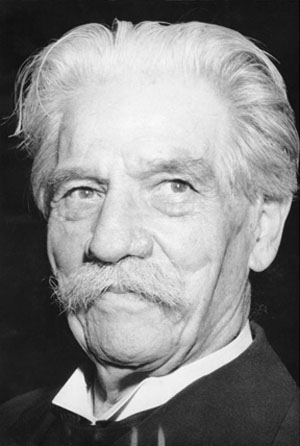
Schweitzer, A. (n.d.). Thinkexist.com. Ethics Quotes. Retrieved from Thinkexist.com website: http://en.thinkexist.com/quotes/with/keyword/ethics/2.html
Clark, P.G., Cott, C., & Drinka, T.J.K. (2007). Theory and practice in interprofessional ethics: A framework for understanding ethical issues in health care teams. Journal of Interprofessional Care, 21, 591-603. Retrieved from http://0-web.ebscohost.com.aupac.lib.athabascau.ca/
Fairchild, R.M. (2010). Practical ethical theory for nurses responding to complexity in care. Nursing Ethics, 13, 353-362. doi: 10.1177/0969733010361442.
Last updated: October 11, 2017 ©
Copyright Athabasca University
For questions, comments or to report bad links, email: cnhsweb@athabascau.ca